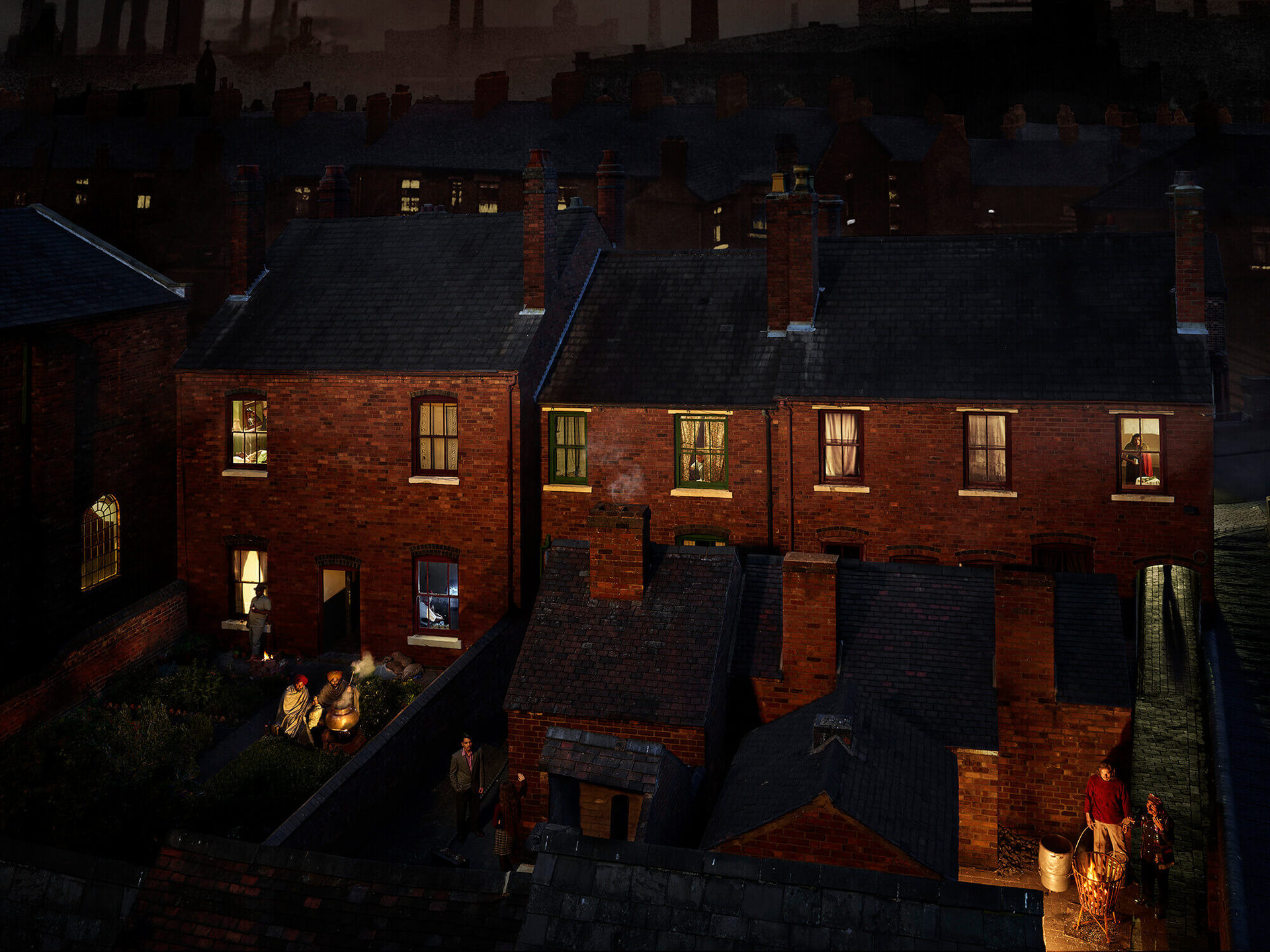
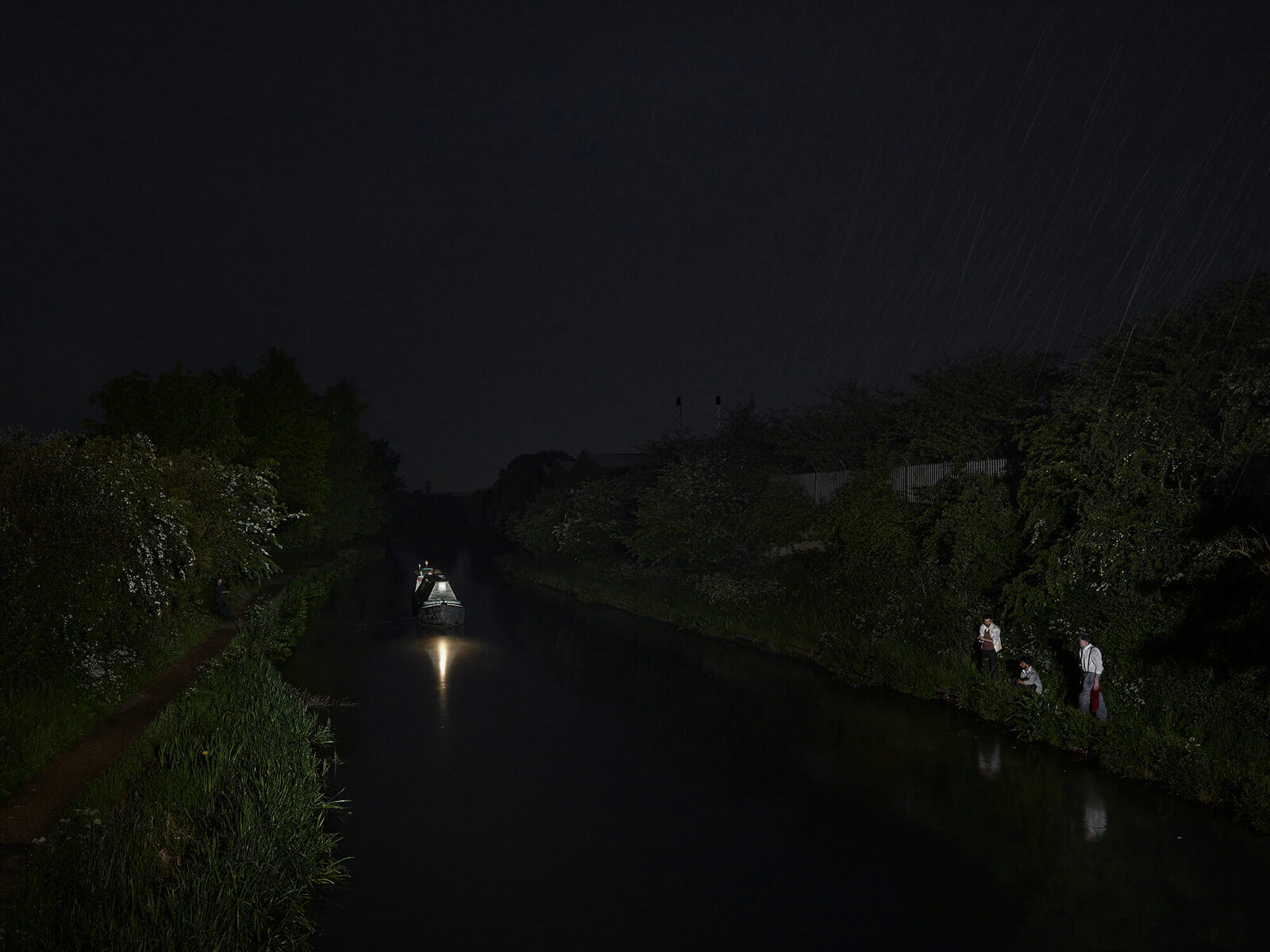
Dayshift · 2019 · Composite photograph from over 800 source files · Arts Council Collection
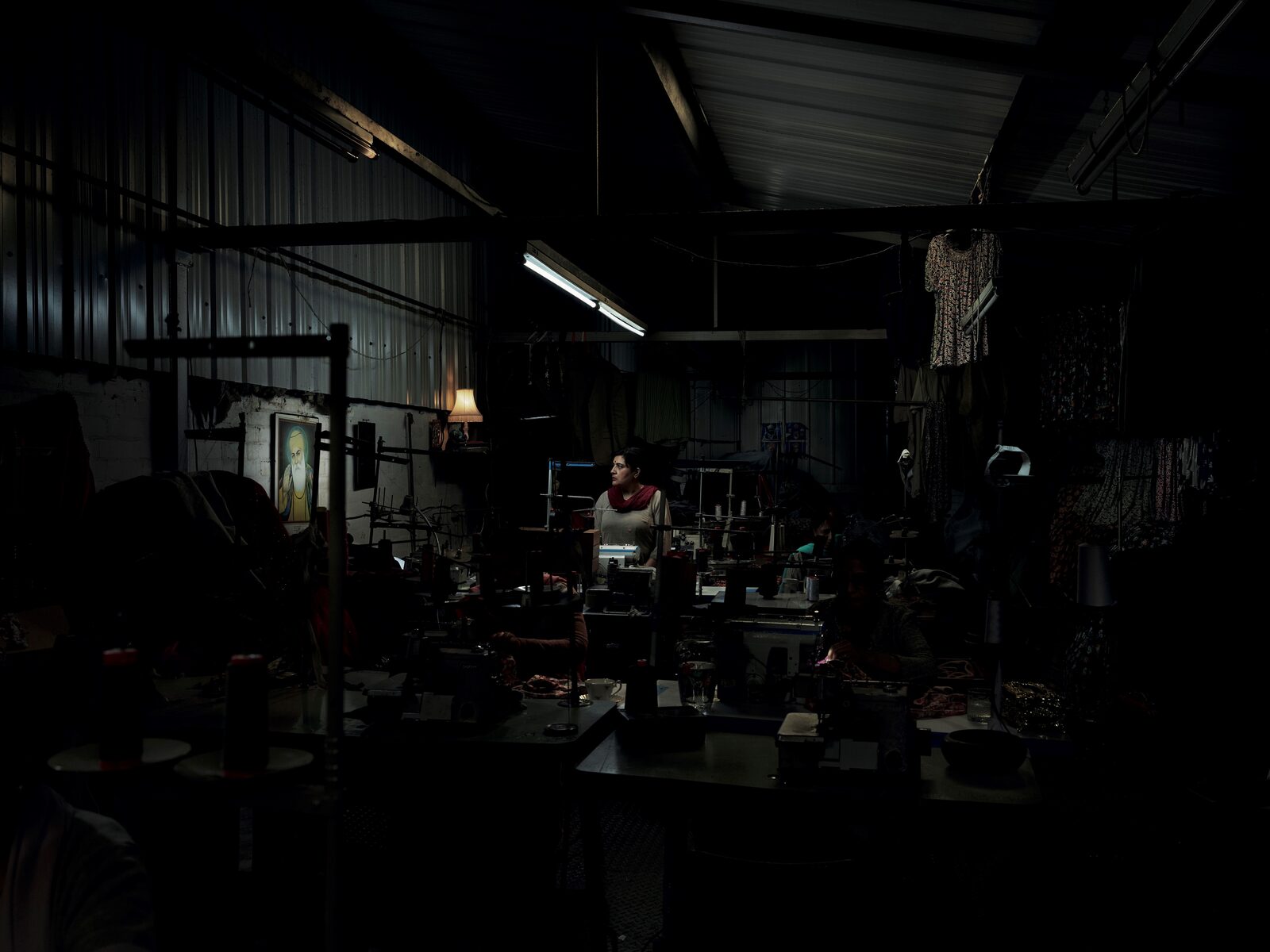
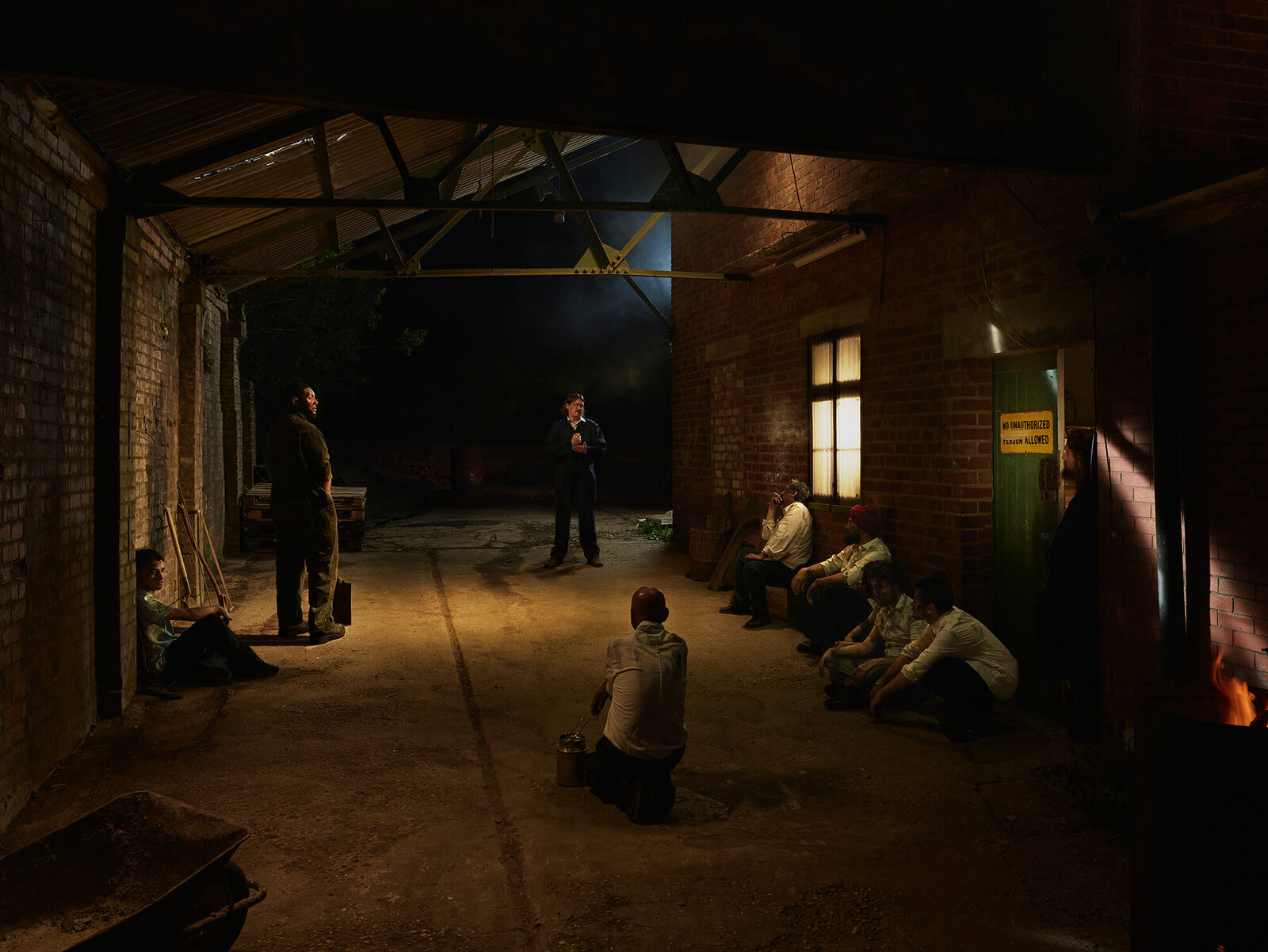
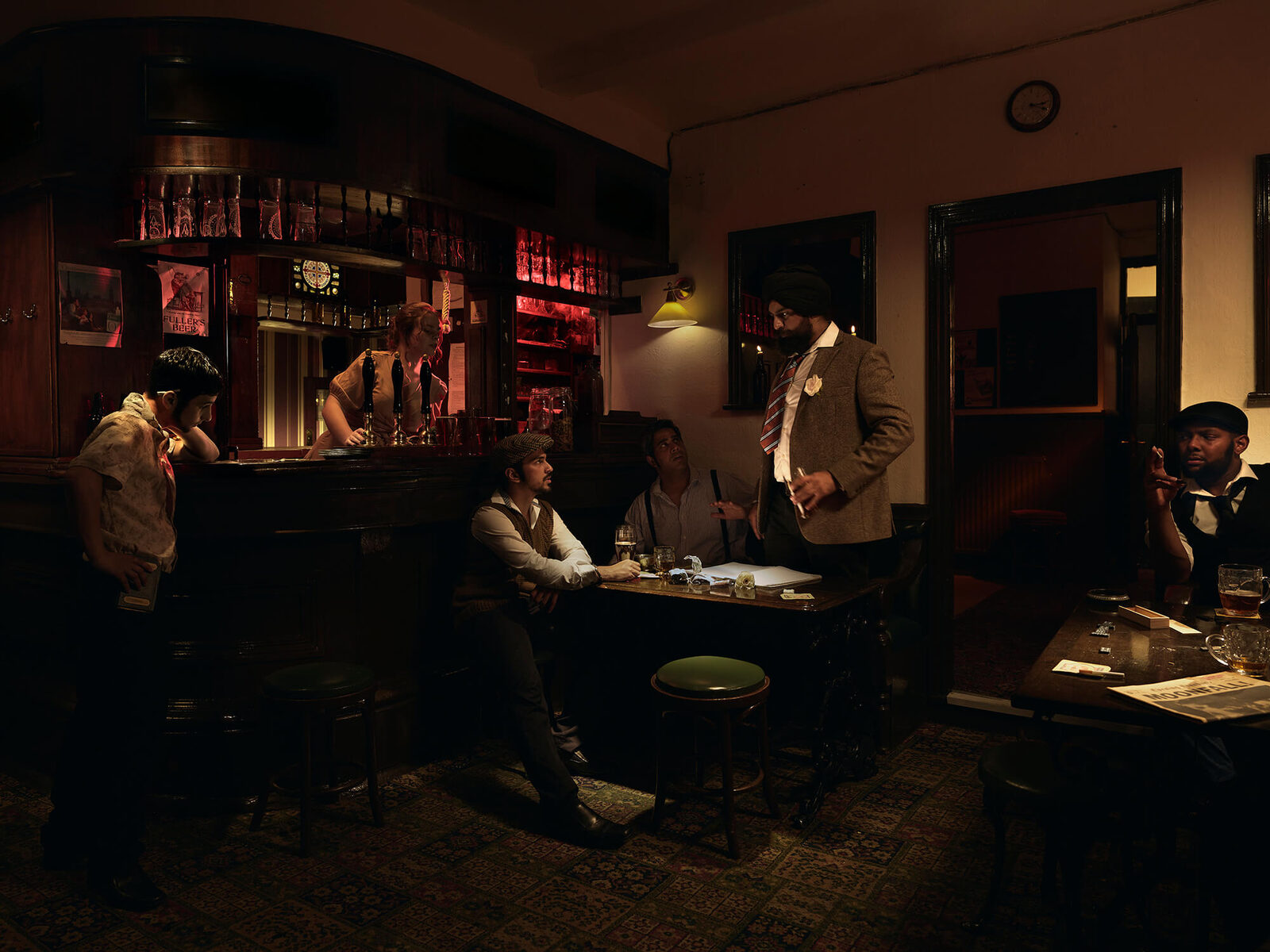
The Exiles is a series of five large-format photographic tableaux made between 2019 and 2023. Each image draws on local folklore, archival research, and family testimony, recreating scenes from the 1960s and 70s when male economic migrants arrived in Sandwell, in the Black Country, in the last throes of its industrial might.
The work uses the principles of cinema: large-scale lighting, set builds, casting, costume, and cinematic reference, applied to make a single still image. Each tableau is composed in post from hundreds of source files. The first, Dayshift, was made in 2019 as what was, in principle, a single-shot film. The remainder of the series was made in 2022 after the lockdown pause.
Dayshift is held in the Arts Council Collection. Seamstress and Furnacemen were acquired by the Contemporary Art Society and placed at The New Art Gallery Walsall. Seamstress won the GMC Trust First Prize at the RBSA Photography Exhibition in 2023. The title is borrowed from Kent Mackenzie's 1961 docu-drama of the same name, which followed a group of young Native Americans who had left reservation life to live in Bunker Hill, Los Angeles.
It's personal, it's political but it's also planetary. It goes back to the 1960s, but also thinks about deep time and thinks geologically. There's an ambition to that.
Ekow Eshun, UAL 20/20, 2025